
Day 4: Three States, Countless Stories

Updated: Oct 6
Day 4 was one of those Route 66 days where every few miles seemed to reveal another classic roadside attraction, historic motel, or piece of Americana. We started the morning in Cuba, Missouri, and by nightfall had traveled through Missouri and Kansas before arriving in Tulsa, Oklahoma.
We spent some time exploring Cuba, known as the "Mural City." Colorful murals throughout town tell the stories of the region, while Route 66 landmarks like the historic Wagon Wheel Motel offer a glimpse into the highway's golden age.


A short drive brought us to Fanning 66 Outpost, home of the World's Largest Rocking Chair. Route 66 has never been shy about celebrating the unusual, and this oversized roadside attraction certainly lived up to the highway's reputation for fun and quirky photo opportunities.


Not far down the road, we crossed the historic Devil's Elbow Bridge. Winding through the Ozarks, this stretch of Route 66 feels much the way it must have decades ago, with narrow roads, wooded hills, and beautiful scenery surrounding the old bridge.


A little farther west, we stopped in Waynesville to admire one of Route 66's most recognizable murals. Covering the side of a downtown building, the vibrant artwork celebrates the history, culture, and personalities that helped shape both the community and the Mother Road. It was a great reminder of how Route 66 towns continue to preserve their heritage through public art and local pride.

In Lebanon, we stopped by the legendary Munger Moss Motel, one of the most iconic surviving Route 66 motels. Even if you're not spending the night, it's impossible not to appreciate the famous neon sign and the generations of travelers who have called it home for an evening.


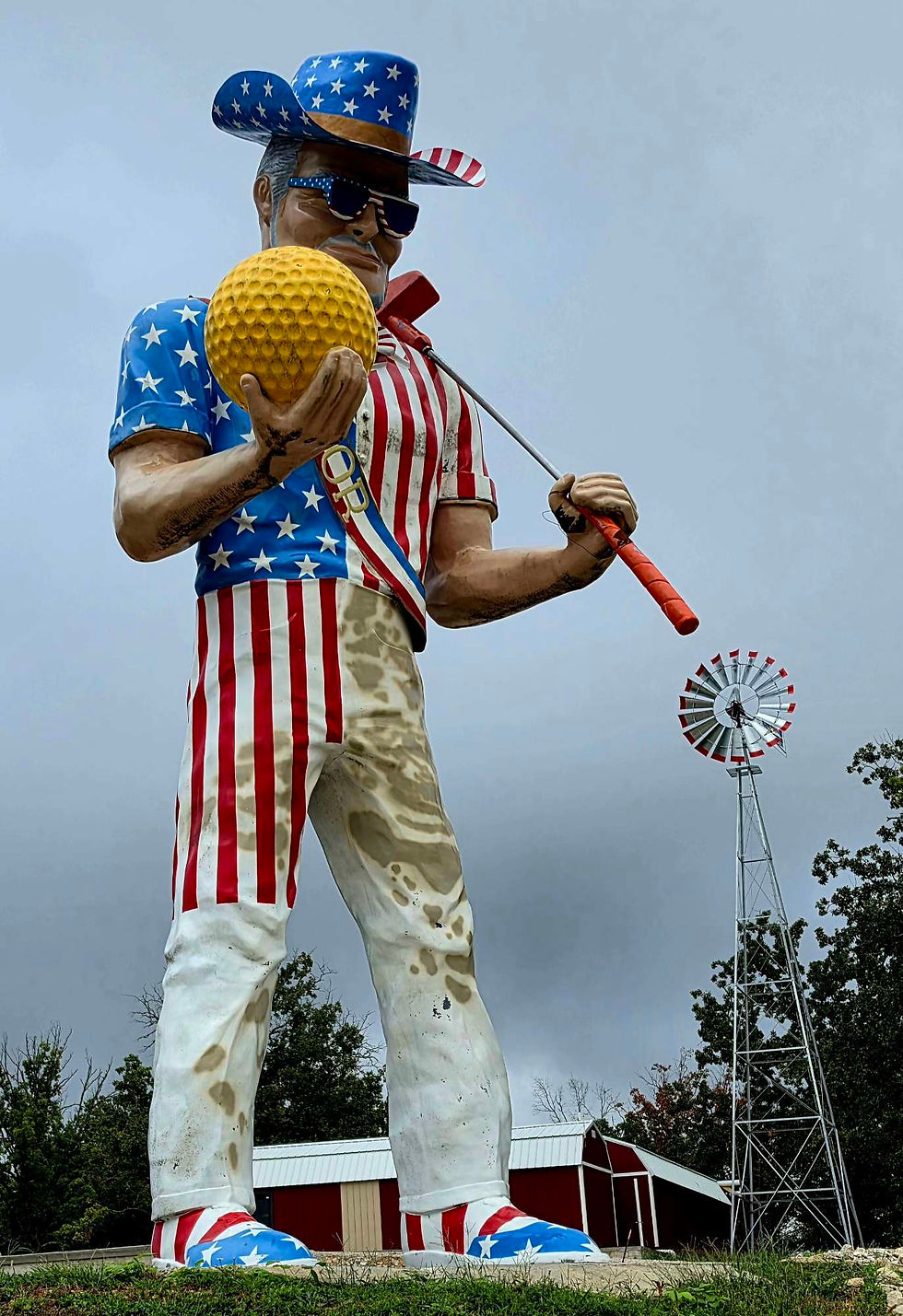
Before leaving the area, we visited the Conway Official Missouri Welcome Center. The center provided a perfect break from the road, offering travel information, exhibits highlighting Missouri's Route 66 heritage, and a chance to stretch our legs. Friendly staff and well-maintained displays made it more than just a rest stop—it was an excellent introduction to the state's rich history along America's most famous highway.


As we continued west, we made a stop at Gary's Gay Parita near Ash Grove. More than a restored filling station, it felt like a love letter to Route 66. The collection of vintage memorabilia and the welcoming atmosphere made it one of the most memorable stops of the day.


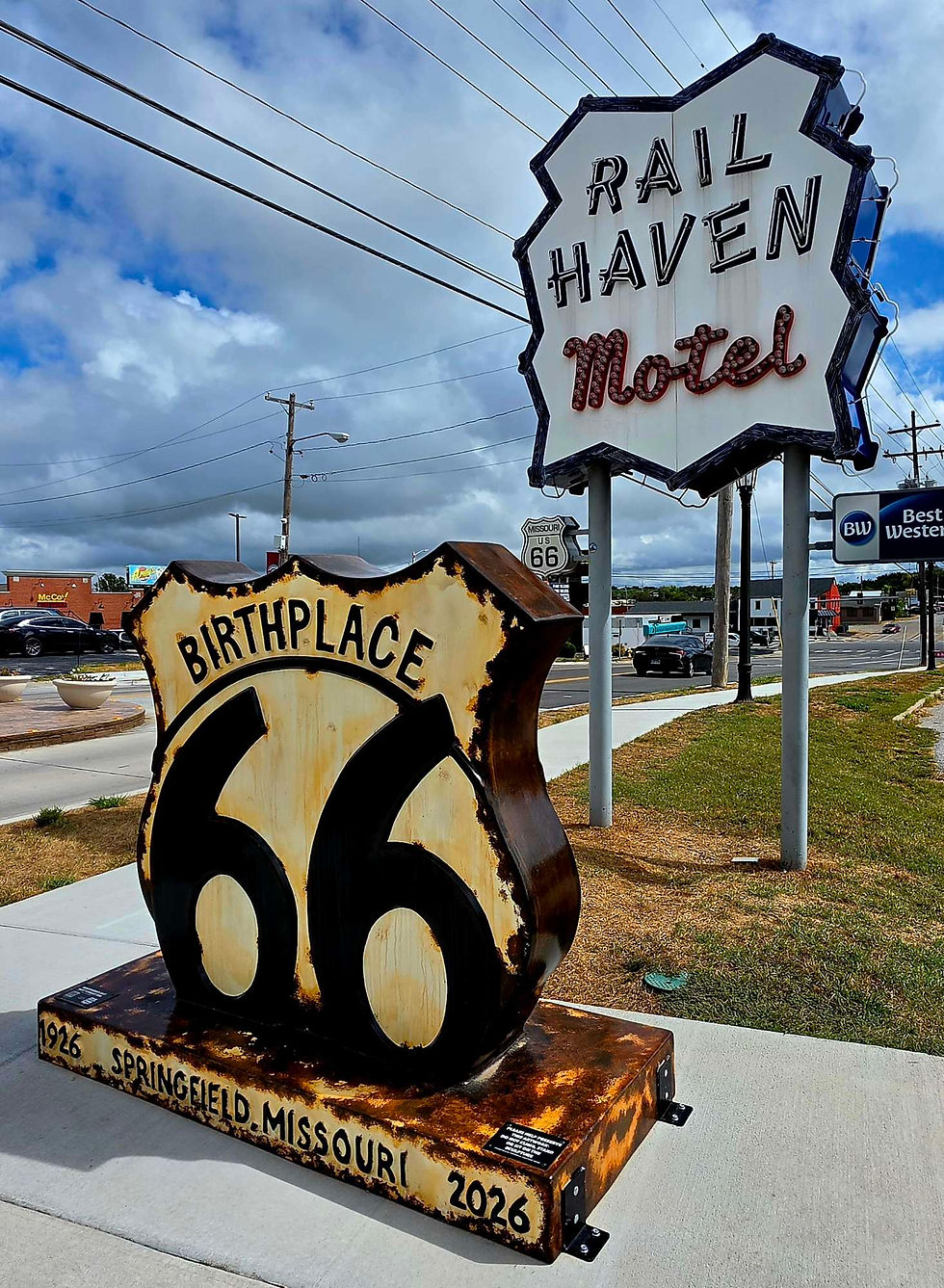
Springfield offered another opportunity to experience Route 66's historic character. We drove past the beautifully restored Rail Haven Motel, one of the highway's most famous lodging landmarks and a longtime favorite among Route 66 travelers. Nearby, the distinctive façade of the Queen City Inn's surviving arch—often referenced as Queen's Gate by Route 66 enthusiasts—served as a reminder of Springfield's important role in the history of the Mother Road. Together, these landmarks helped tell the story of an era when Springfield was a major destination for travelers heading west.

One of Missouri's true highlights was Red Oak II near Carthage. Artist Lowell Davis created an entire village by relocating and restoring historic buildings from nearby communities. Walking through it felt like stepping into a living time capsule where history had been carefully preserved rather than forgotten.

Carthage itself provided plenty to see, including the beautiful Jasper County Courthouse, the restored Boots Court Motel, and the classic 66 Drive-In Theatre. Nearly a century after Route 66 was commissioned, these landmarks continue to remind travelers why the Mother Road remains so beloved.


Before long, we crossed into Kansas, the smallest of the eight Route 66 states but one packed with memorable attractions. In Galena, we visited Cars on the Route, whose famous tow truck is said to have inspired Mater from Pixar's Cars. The town perfectly captures the spirit of Route 66 preservation and community pride.


We also stopped at Gearhead Curios and had dinner at the historic Old Riverton Store, both excellent reminders that some of the best Route 66 experiences happen when you simply slow down and explore.


In nearby Baxter Springs, we crossed the beautiful Rainbow Bridge, the only remaining Marsh Arch Bridge on Route 66 in Kansas. It was a brief but memorable stop before entering our third state of the day.

Soon we reached Oklahoma, where the landscape began to open up and the highway stretched toward the horizon. In Miami, we picked up Route 66 cookies from Dairy King and stopped at the legendary Waylan's Ku-Ku Burger, complete with its giant cuckoo bird keeping watch over the road.


One of the day's most unique stops was Ed Galloway's Totem Pole Park near Chelsea. The towering handmade totem pole and whimsical folk art creations showcased the creativity and individuality that Route 66 has always celebrated.


After visiting the Cross on the Prairie in Adair, we continued west to Catoosa to see another Route 66 icon: the Blue Whale. What began as a family's lakeside project has become one of the most photographed landmarks along the entire route, and seeing it in person was a must.


By evening, we arrived in Tulsa, one of Route 66's most historic cities. We wrapped up the day at La Quinta Inn & Suites by Wyndham Tulsa Downtown – Route 66, reflecting on a journey that had covered three states, countless attractions, and hundreds of miles of highway.
Some days on Route 66 are about the drive. Others are about the destinations.
Day 4 was about both.
From giant rocking chairs and restored gas stations to folk art, neon signs, historic motels, and the Blue Whale, this was Route 66 at its most colorful, nostalgic, and unforgettable.


Comments