
Day 7: Leaving Route 66 for Santa Fe

Updated: Oct 6
After several days of following Route 66 across the plains, Day 7 brought a change of pace. Today we left the main route for the historic Santa Fe Loop, trading classic roadside attractions for ancient pueblos, adobe architecture, and one of the oldest cities in America.
We started the morning with breakfast at SideKix on 66 in Tucumcari. Over coffee and a hearty breakfast, we watched the town slowly wake up before beginning another day of New Mexico exploration.


Before leaving town, we stopped for photos at two of Tucumcari’s most recognizable landmarks. The beautifully restored Odeon Theatre stands as a reminder of Route 66’s golden age, while the iconic La Cita Restaurant sign remains one of the city’s most photographed neon treasures. The vintage architecture and brightly colored signs perfectly captured the character that makes Tucumcari a favorite stop for Route 66 travelers.


Our first stop was tiny Cuervo, one of the nearly forgotten communities scattered along the old highway. The highlight was the beautiful red-brick Catholic church, built in 1915, standing as a testament to the generations who once called this remote stretch of New Mexico home. Places like Cuervo remind you that Route 66 wasn't just a road connecting cities—it connected small communities whose stories are still written across the landscape.

In Santa Rosa, we stopped at the famous Blue Hole, one of New Mexico's most surprising natural attractions. The crystal-clear, sapphire-blue water seems almost unreal against the desert backdrop. Looking down into the deep spring-fed pool, it was easy to understand why divers travel from around the world to experience it.


From there, we continued west toward the mountains and the historic Santa Fe Trail.
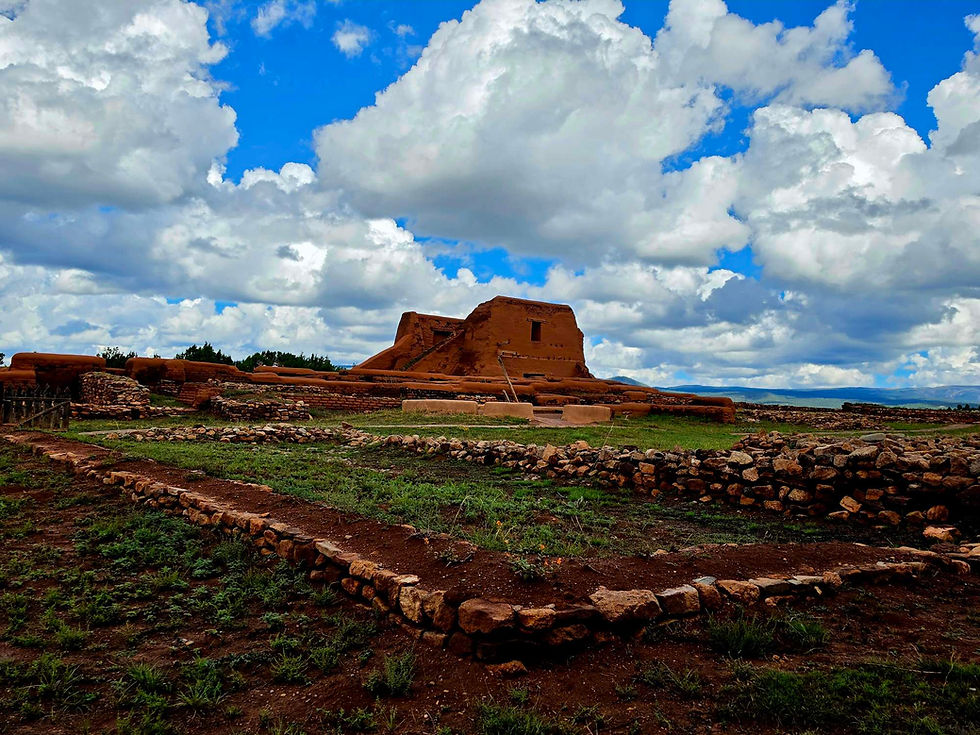
One of the day’s most memorable experiences came at Pecos National Historical Park. We chose to hike the Ancestral Sites Trail, a self-guided walk through centuries of Southwestern history. The trail winds through the remains of Pecos Pueblo, where the foundations of homes, ceremonial spaces, and community structures tell the story of generations who lived here long before Europeans arrived.

Along the trail, we were surrounded by the plants that define this high-desert landscape. Clusters of prickly pear cactus dotted the ground with their broad pads, while Rocky Mountain juniper and piñon pine trees provided shade and filled the air with their distinctive fragrance. The scenery felt rugged yet peaceful, with sweeping views of the surrounding mountains and grasslands.


The most fascinating features were the reconstructed and preserved kivas—circular ceremonial chambers that served as important spiritual and community gathering places. Standing beside these ancient structures, it was easy to imagine the generations who gathered here centuries ago. The trail offered a powerful connection to the people whose lives shaped this crossroads of Native American, Spanish Colonial, and frontier history.


By late afternoon, we arrived in Santa Fe, one of the most unique cities we’ve visited so far. After days of small towns and roadside attractions, Santa Fe felt like stepping into another world. Adobe buildings, narrow streets, vibrant art galleries, and Southwestern architecture gave the city an atmosphere unlike anywhere else on our trip.
After checking into El Sendero Inn, we set out to explore the city’s historic heart.
Our first stops included Loretto Chapel and the Cathedral Basilica of St. Francis of Assisi, both remarkable examples of Santa Fe’s rich religious and architectural heritage.


We then wandered through the historic Santa Fe Plaza, where local artists, musicians, and visitors created the lively atmosphere that has made the square the center of city life for centuries.


As evening approached, dark clouds began to gather over the Sangre de Cristo Mountains. Before long, a summer thunderstorm rolled into the city. We stopped for dinner at the Palacio Café, where we enjoyed classic New Mexican cuisine while listening to rain pound against the windows.

Unfortunately, the storm showed no sign of letting up when we finished eating. The walk back to the hotel quickly turned into an adventure of its own. Within minutes we were completely drenched, laughing as we splashed through puddles and hurried through the rain-soaked streets of Santa Fe.
Back at El Sendero Inn, a hot shower and a pair of dry pajamas felt like absolute luxury after the soaking we’d received.
The evening slowed considerably from there. Instead of heading back out, we settled in with biscochitos and coffee, enjoying New Mexico’s famous state cookie while listening to the storm continue outside.

As we reflected on the day, it felt like a perfect introduction to Santa Fe. From ancient pueblo ruins and sacred kivas to historic churches, mountain thunderstorms, and warm hospitality, the city had already demonstrated why it is unlike any other stop on our Route 66 journey.
Route 66 may have brought us here, but today reminded us that some of the most memorable travel moments aren’t found on an itinerary—they arrive unexpectedly with a thunderstorm, a hot shower, and a plate of biscochitos at the end of a long day.
Tomorrow, the journey continues.


Comments