
Day 9: Ancient Trails, Lava Fields, and the Spirit of the Southwest

Updated: Oct 6
Day 9 carried us across western New Mexico through landscapes shaped by volcanoes, ancient cultures, and centuries of travelers. It was a day when Route 66 often felt secondary to the much older stories woven throughout this stretch of the Southwest.
We started the morning in Albuquerque, watching hot air balloons drift lazily across the horizon before heading west along Central Avenue and continuing our journey toward Arizona.
Our first stop was Petroglyph National Monument, where thousands of rock carvings are etched into volcanic stone along the edge of Albuquerque. Walking the trails among symbols carved centuries ago was a powerful reminder that people have been traveling, living, and leaving their marks on this landscape long before Route 66 ever existed.


As we followed the old highway west, we passed several classic Route 66 landmarks, including Enchanted Trails RV Park & Trading Post, the historic Rio Puerco Bridge, and Route 66 Casino. Soon the city gave way to open desert and some of the most scenic stretches of road we had driven so far.


Near Mesita, we stopped to admire Owl Rock, a distinctive formation that appears to watch over the highway. Just beyond it lies another notorious Dead Man's Curve, where the old alignment twists sharply through the landscape. It is easy to understand why early travelers had to stay alert while navigating this section of the Mother Road.

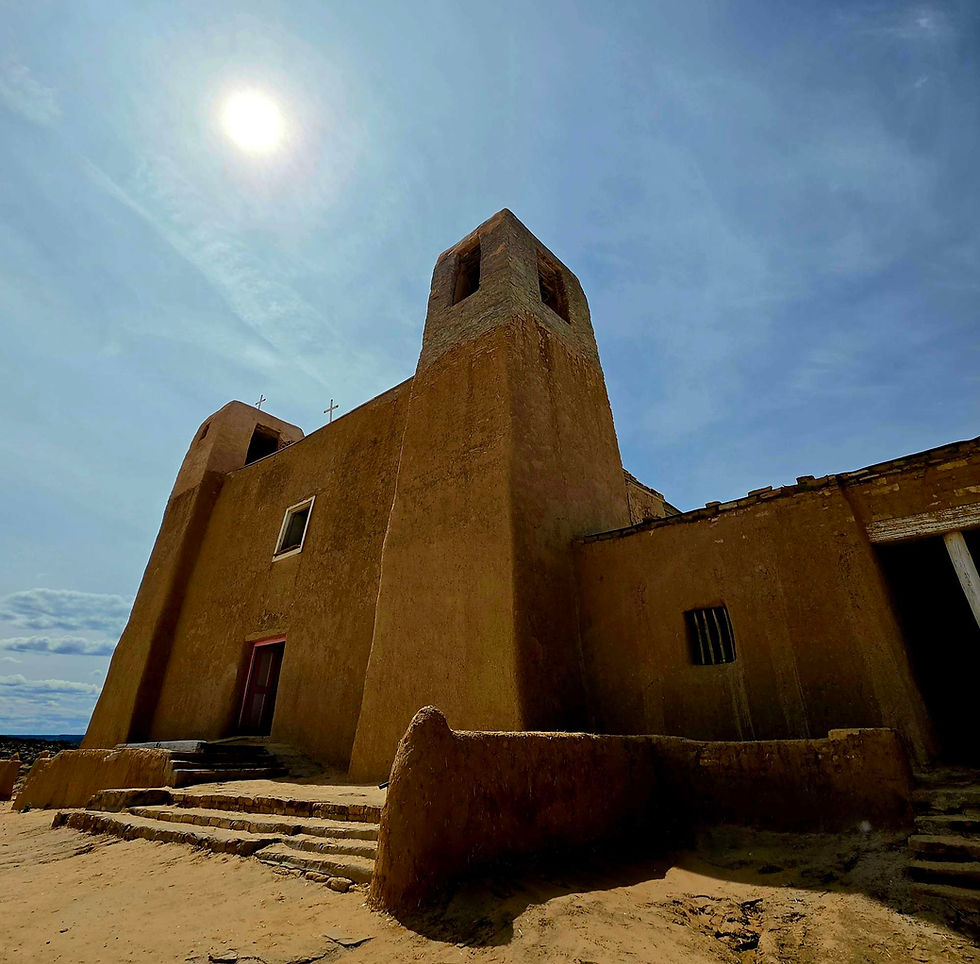
Western New Mexico quickly became a journey through history. In Laguna, we visited the beautiful San José Mission, a church that has served the community since the late 1600s. Nearby, other historic churches and mission buildings tell the story of Spanish influence across the region and the blending of cultures that helped shape the Southwest.

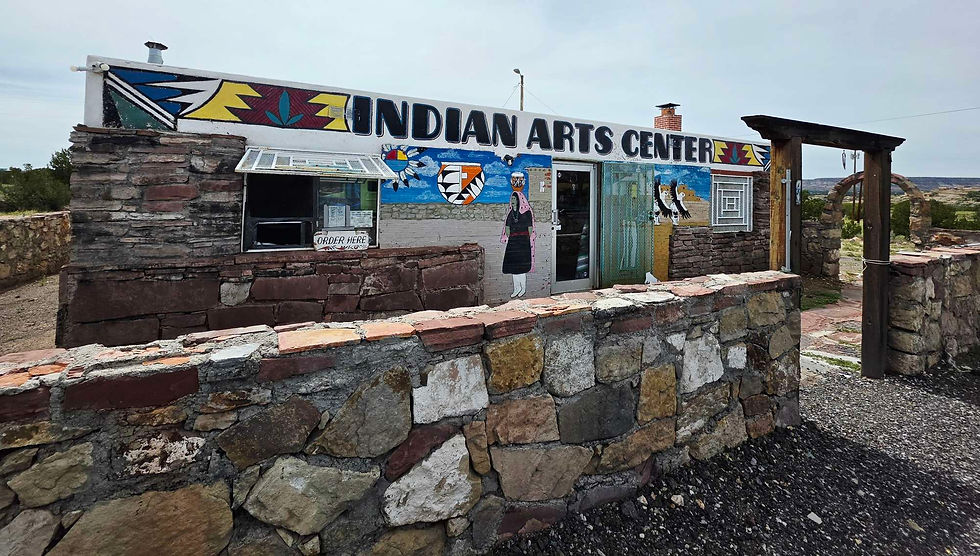
By lunchtime, we stopped at the Indian Arts Center, where we admired handcrafted Native American jewelry created by the Yellowhorse family, whose work reflects generations of Navajo craftsmanship and artistry. The perfect souvenirs were hard to resist. We also enjoyed Indian tacos made with fresh fry bread, a regional favorite that added another layer to our Southwestern experience.


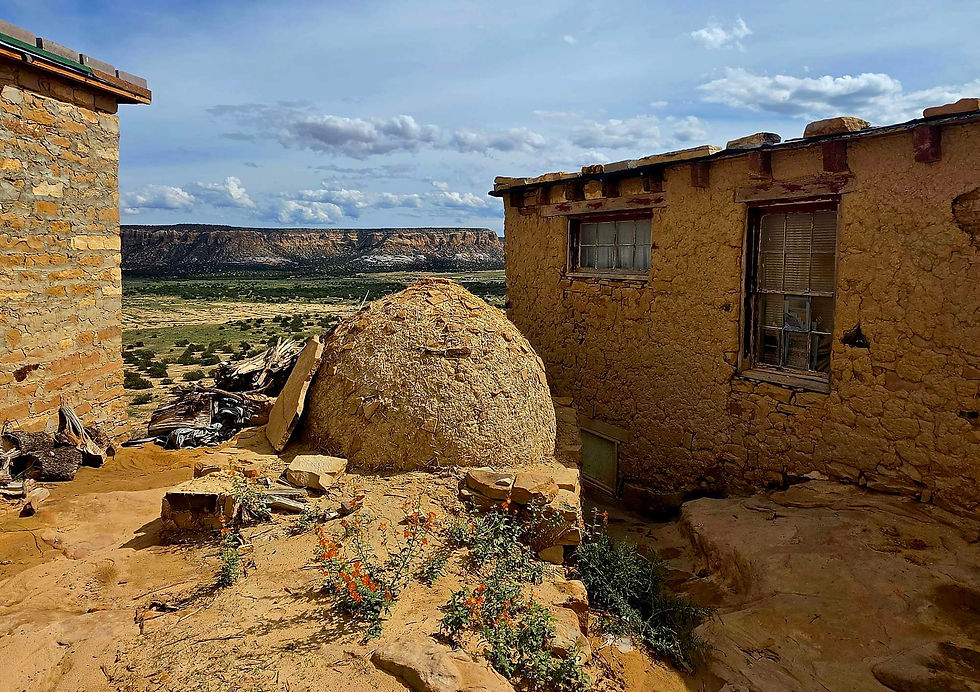
One of the day's highlights was Acoma Pueblo, often called "Sky City." Perched atop a sandstone mesa, it is one of the oldest continuously inhabited communities in North America. Learning about its history, traditions, and resilience gave us a deeper appreciation for the generations who have called this rugged landscape home.




Route 66 soon carried us through small communities like Budville, Cubero, and San Fidel, each filled with trading posts, historic buildings, and reminders of the road's heyday. These towns may not attract large crowds, but they preserve much of the character and authenticity that make Route 66 so special.
By afternoon, we reached Grants and headed south to nearby El Malpais National Monument.
El Malpais felt like another planet.
The landscape is covered with ancient lava flows, volcanic craters, sandstone cliffs, and rugged terrain stretching toward the horizon. We explored portions of the El Calderon Trail, where powerful volcanic forces shaped the land thousands of years ago. The contrast between the black lava fields and the brilliant blue New Mexico sky created some of the most dramatic scenery we had encountered on the trip.

Nearby, we stopped at Sandstone Bluffs Overlook, where sweeping views revealed a vast patchwork of lava flows, mesas, and distant mountains. The perspective offered a striking reminder of the immense geological forces that shaped this region.


We also visited La Ventana Natural Arch, one of the largest natural arches in New Mexico. Framed against the desert landscape, its massive sandstone opening stood as yet another example of the incredible natural beauty hidden along this stretch of Route 66.

One of the biggest milestones of the day came at the Continental Divide. Standing at the point where water flows toward either the Pacific Ocean or the Gulf of Mexico felt especially fitting during a cross-country journey. We paused for photos and reflected on just how far west we had traveled since leaving Chicago.

By late afternoon, we rolled into Gallup, New Mexico's final major Route 66 city before Arizona. Known as the "Indian Capital of the World," Gallup has long been a crossroads of Native American culture, railroads, and Route 66 travel.
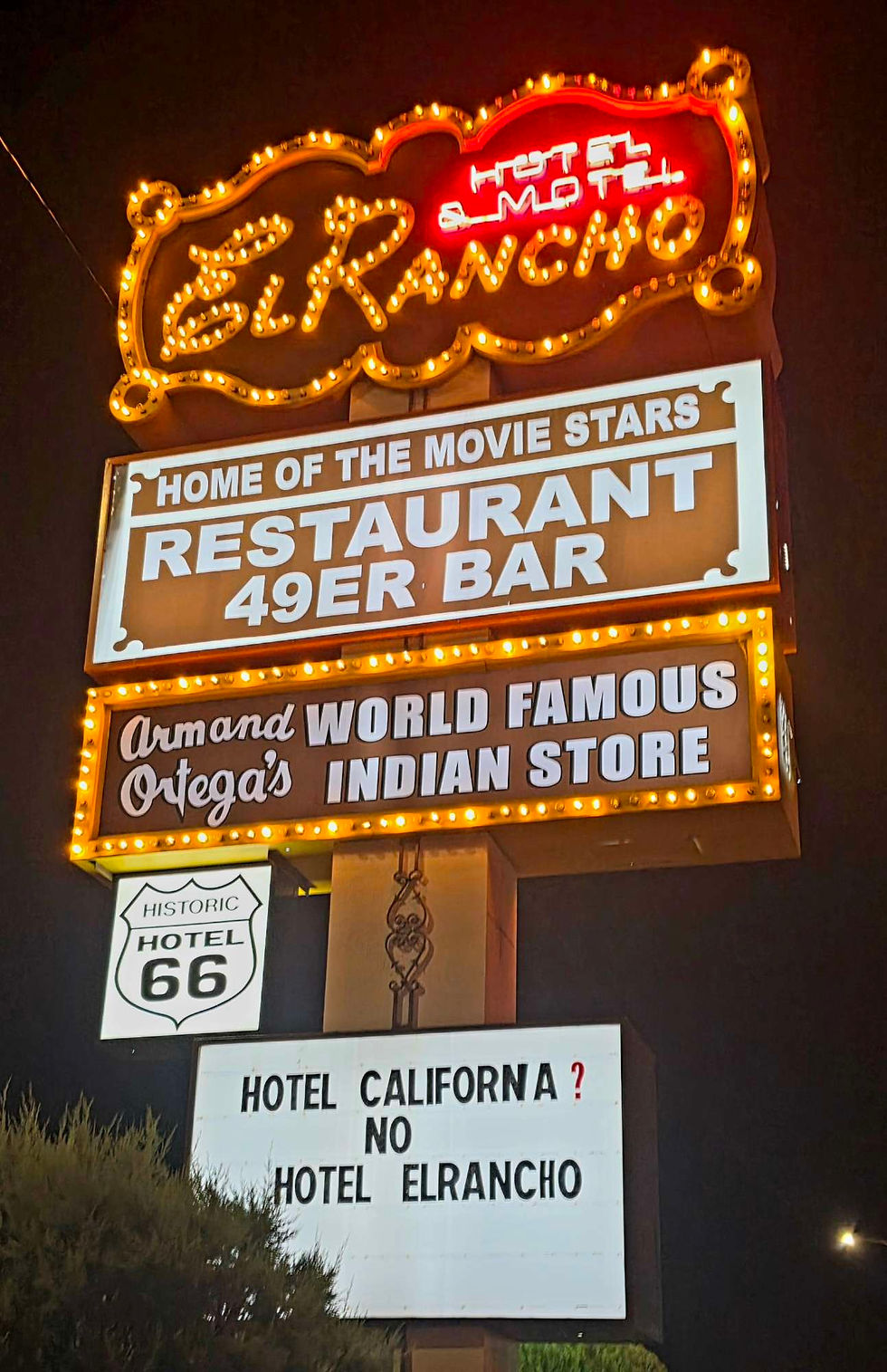
Our home for the night was the legendary Hotel El Rancho, one of the most famous hotels on the entire route. Built in the 1930s, the hotel became a favorite gathering place for Hollywood stars filming Westerns throughout the Southwest. Walking through the lobby felt like stepping onto a movie set, with photographs and memorabilia celebrating decades of cinematic history.


Dinner at El Rancho provided the perfect ending to the day. Over plates of New Mexican comfort food, we reflected on everything we had seen: ancient petroglyphs, centuries-old churches, Native American culture, volcanic landscapes, dramatic desert scenery, and classic Route 66 landmarks.
Today felt less like a road trip and more like a journey through time.
Tomorrow, we'll leave New Mexico behind and cross into Arizona as our Route 66 adventure continues west toward the Pacific.


Comments