
Day 8: Ancient History, Mountain Views, and Route 66 Neon

Updated: Oct 6
After spending the night in Santa Fe, Day 8 took us from centuries-old Native American history to one of the longest aerial tramways in the world, before ending with a deep dive into Albuquerque’s rich Route 66 heritage.
We started the morning at San Miguel Chapel and the Oldest House in Santa Fe before heading south toward Bernalillo. New Mexico continues to surprise us with its ability to blend history, culture, and natural beauty at every stop.
Our first stop, San Miguel Chapel, is often recognized as the oldest church in the continental United States. Originally built in the early 1600s by Tlaxcalan Native Americans who accompanied Spanish settlers, the simple adobe structure has endured wars, revolts, and centuries of change. Inside, the thick adobe walls, handcrafted wooden beams, and historic altar create an atmosphere that feels remarkably untouched by time. Standing inside the chapel offered a tangible connection to the earliest days of European settlement in the Southwest.


Just a short walk away is the Oldest House, a modest adobe structure believed to contain portions dating back more than 800 years. Built atop the remains of an ancient Pueblo dwelling, the house serves as a reminder that Santa Fe's history stretches back long before Spanish colonization. Its thick earthen walls and traditional construction techniques illustrate how generations of inhabitants adapted to life in this desert landscape.

Our first destination after leaving Santa Fe was the Coronado Historic Site, where the stories of Native American civilizations and early Spanish exploration intersect. Walking through the ruins of Kuaua Pueblo and viewing the reconstructed painted kiva offered a fascinating glimpse into a culture that flourished here long before Route 66 or even the Santa Fe Trail existed. It was one of those places that reminds you how many layers of history are woven into the American Southwest.


Lunch at the Range Café provided a perfect taste of New Mexico before we ventured into nearby Corrales, a charming village that feels worlds away from modern city life. Historic adobe buildings, the Old San Ysidro Church, and quiet country roads made it easy to imagine life here a century ago.


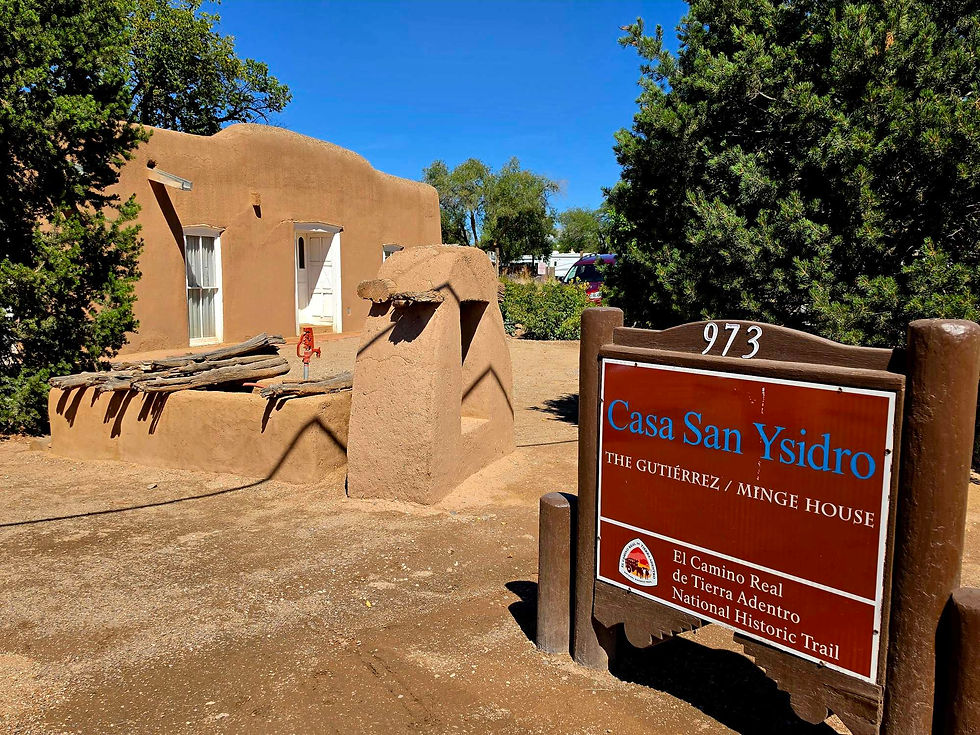

The highlight of the afternoon was undoubtedly the Sandia Peak Tramway.
As the tram climbed above Albuquerque and into the Sandia Mountains, the views became increasingly spectacular. In just fifteen minutes, we rose thousands of feet above the desert floor. From the summit, we could see the Rio Grande Valley stretching for miles in every direction, framed by mountains, mesas, and endless New Mexico sky. Standing at the top felt like looking across an entirely different world from the one we had driven through below.


By late afternoon, we arrived in Albuquerque, one of the most significant Route 66 cities in the country. After checking into the beautifully restored El Vado Motel, we wandered through Old Town Albuquerque, where centuries-old adobe buildings surround a lively plaza filled with shops, galleries, and historic landmarks.


At the heart of the plaza stands San Felipe de Neri Church, one of Albuquerque's most recognizable landmarks. Founded in 1706 and rebuilt in its current form in 1793, the church has watched over Old Town for more than two centuries. Its twin towers, adobe architecture, and peaceful courtyard provide a striking reminder of Albuquerque's Spanish colonial beginnings. The contrast between Old Town's deep historical roots and Route 66's mid-century Americana perfectly captures the city's unique character.


Dinner at Garcia's Kitchen introduced us to even more authentic New Mexican flavors. By now we've learned an important lesson: when in New Mexico, order the chile.


To finish the evening, we began our own Route 66 tour along Central Avenue, which follows the path of the Mother Road through the city.
Driving down Central felt like traveling through a living Route 66 museum. Neon signs, historic motels, classic diners, and restored theaters lined the route. Among the highlights were the El Camino Motel, the Tewa Motor Lodge, the beautifully restored KiMo Theatre, the Lobo Theater, and the famous 66 Diner, each preserving a piece of Route 66's golden age.


We also paused at several uniquely Albuquerque landmarks, including the Madonna of the Trail and the giant Roadrunner statue, a fitting symbol for a city that embraces both its history and sense of fun.


As we returned to El Vado for the night, the neon signs along Central Avenue glowed against the desert sky. The vintage motel, restored Route 66 landmarks, and vibrant city atmosphere made Albuquerque feel like one of the great Route 66 destinations.

Today we explored ancient pueblos, rode to the top of a mountain, walked through buildings that have stood for centuries, and immersed ourselves in both the Spanish colonial and Route 66 heritage that make New Mexico so unique.
The farther west we travel, the more diverse the story of the Mother Road becomes.


Comments